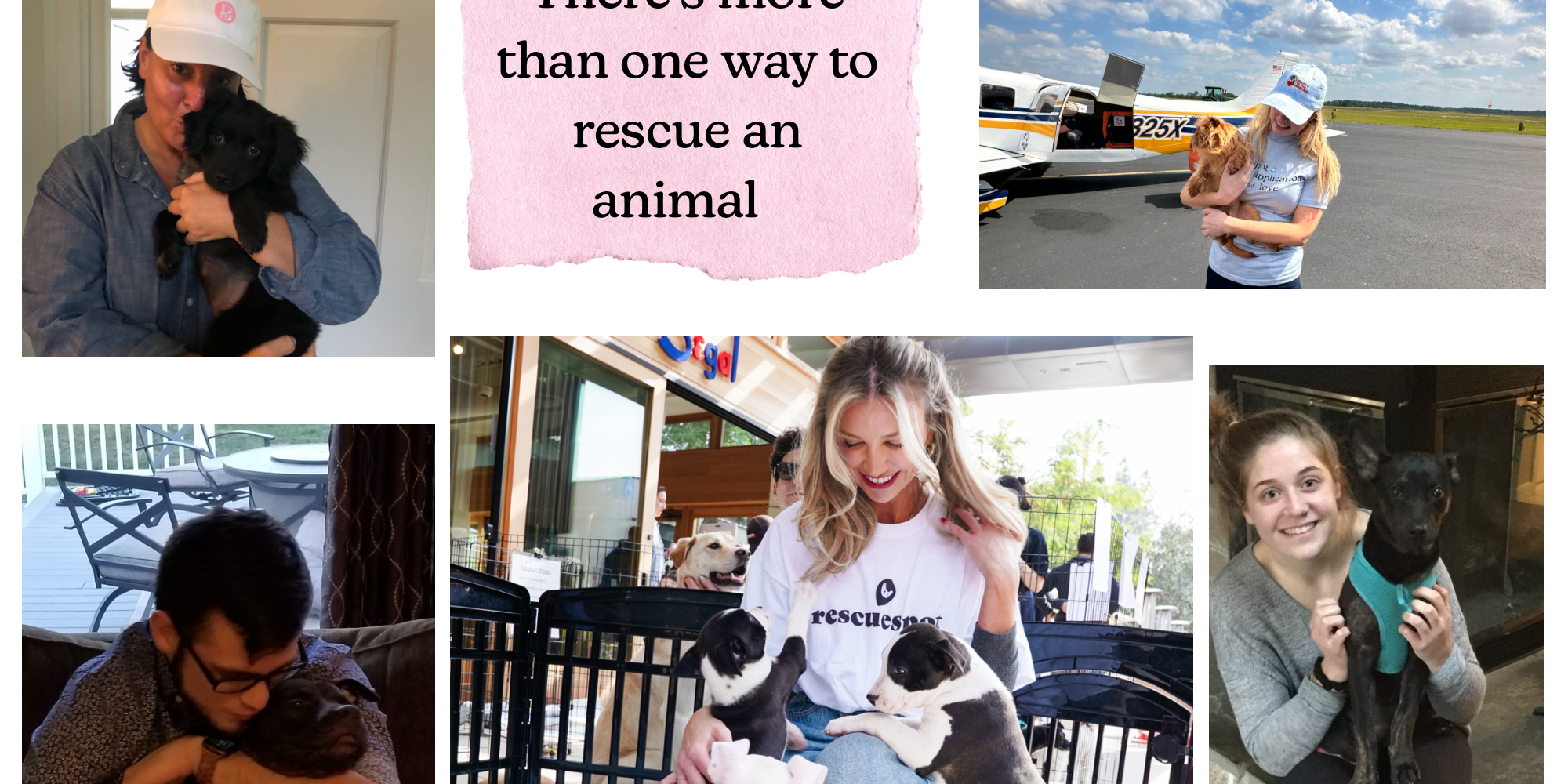
There’s More Than One Way to Rescue an Animal

When people find out that I work in animal rescue, one of the first things they often say is, “I wish I could help, but I just don’t have the time.”
And honestly, I understand.
That is exactly where my own journey started.
When I first became involved in animal rescue, I was still in high school and working as a professional actor. Between school, auditions, filming, and traveling, I didn’t have the kind of predictable schedule that allowed me to volunteer physically at a shelter every week.
I loved animals. I wanted to give back. I wanted to be part of the rescue community.
I just didn’t know what that could look like for me.
Eventually, I realized that helping animals did not have to mean doing the exact same thing everyone else was doing.
Animal rescue is not only about cleaning kennels, fostering dogs, bottle-feeding kittens, or transporting animals across the country. Those roles are incredibly important, but they are part of a much larger ecosystem. Every animal who finds safety depends on a chain of people—sometimes dozens of them—each contributing something different.
Every adoption also begins with someone discovering an animal they did not know existed.
So I decided to help with that part.
I started a small, free matchmaking service where I helped people search for adoptable pets in their area instead of going to a pet store. I would talk to families about what they were looking for, search through rescue listings, find animals who might be a good fit, and help people navigate the application process.
At the time, it was simply my way of helping.
I had no idea that this little project would eventually grow into rescue work later in my life and help inspire the concept behind Rescue Spot.
But it taught me something I have carried with me ever since:
You do not have to run a rescue to save a life.
You do not need unlimited free time, a huge social media following, or a home filled with foster animals. You do not need to know everything about rescue before you begin. You simply need to look at what you already have—your interests, your talents, your relationships, your community—and find a way to put one of those things to work.
That can begin with something as ordinary as a birthday party.
Instead of receiving gifts, an adult might ask friends to donate to a local shelter or contribute toward the medical care of one specific animal. A child’s birthday can become an opportunity to teach generosity in a way that feels exciting and tangible. Imagine an animal-themed party where every guest brings a bag of food, a blanket, or a toy for a shelter pet. The children could paint dogs, decorate paper cats, make adoption signs, or create portraits and stories inspired by real animals waiting for homes.
The party is still colorful, fun, and centered around the birthday child. It simply carries an additional message: celebrating your own life can also mean making life better for someone else.
Children are often some of the most enthusiastic members of the rescue community when they are given a real way to participate. A neighborhood lemonade stand can raise money for kitten formula. A bake sale can help cover an animal’s vaccinations. A classroom can collect toys, towels, food, or cleaning supplies for a shelter nearby.
Even a child who is still building confidence with reading may have something meaningful to offer. Some shelters have programs where children read aloud to animals. The child gets to practice without worrying about being corrected or judged, while a nervous dog or frightened cat gets to experience the calm presence of someone sitting nearby. It is a quiet form of volunteering, but that does not make it insignificant. Helping an animal feel safe is real rescue work.
As adults, many of us already spend time in places that could become unexpected rescue partners. The boutique where you shop, the coffee shop where you work, the restaurant you love, your neighborhood bar, salon, fitness studio, bookstore, or bakery may be open to hosting a fundraiser if someone brings them the idea.
A store could dedicate a percentage of one evening’s sip and shop sales to a shelter. A restaurant could create a special menu item benefiting a rescue. A bar could host a raffle or adoption-themed happy hour. Depending on the space and the rescue’s policies, a few adoptable animals might even attend.
These partnerships do not have to begin with a formal proposal or a major organization. Sometimes they begin because one regular customer says, “I know a local rescue doing incredible work. Would you ever consider hosting something for them?”
That introduction may lead to donations, new supporters, or an adoption. It may even turn into a relationship that lasts for years.
The same is true of social media. Most of us already spend more time scrolling than we would like to admit, but those platforms can become powerful rescue tools when used intentionally.
Someone could create an account dedicated to sharing favorite adoptable animals found each week. It might focus on senior dogs, bonded pairs, black cats, special-needs pets, large dogs, or animals who have spent months being overlooked. It does not need thousands of followers. A small local audience may be far more valuable if it includes the right adopter, foster, volunteer, or donor.
Even without creating a separate account, sharing an animal’s post matters. So does commenting, saving it, or sending it directly to someone who may be interested. A “like” is nice, but a share introduces that animal to an entirely new group of people.
One of my favorite things about rescue is that almost every skill can become useful when viewed through the right lens.
An artist can paint an adoptable dog and help people see more than a kennel photo. The finished piece could be shared with the rescue, auctioned to raise money, or gifted to the eventual adopter.
A writer can turn a few basic facts into an adoption biography that finally captures an animal’s personality. They might help with newsletters, blog posts, donor stories, or social media captions. With enough creativity, the stories of real rescue animals could even become a children’s book or coloring book that raises funds while teaching young readers about adoption.
Photographers can replace dark, blurry intake photos with portraits that help adopters imagine an animal in their home. Graphic designers can create event signs and social media templates. Marketing professionals can help shape a campaign. Accountants and attorneys may be able to provide the kind of specialized support that small nonprofits often struggle to afford.
The possibilities extend far beyond traditional professional skills. Someone who knits can make blankets for kittens, senior pets, or animals recovering from surgery. A highly organized person can sort supplies, build an inventory system, plan a raffle, or create foster welcome kits. A person who loves video can capture footage that a rescue uses for months.
The most valuable contribution may not be the most obvious one. An hour of the right kind of help can sometimes save a small rescue days of work and no skill is too basic or small.
Workplaces, schools, apartment buildings, and community groups can multiply that impact. An office might sponsor the adoption fee of one pet each month, perhaps choosing an animal who has been waiting especially long. Over the course of a year, that could mean twelve animals receiving an extra push toward finding homes.
Another company might collect supplies for a different rescue each month, match employee donations, sponsor a kennel, fund a medical case, or organize a volunteer day. Schools can host collection drives or raise money for a specific animal. A gym, neighborhood association, or social club could do something similar.
The point is not that every person needs to contribute a large amount. It is that one person can introduce an idea that gives an entire group a way to participate.
Of course, some people do want to help more directly but assume fostering is impossible because they cannot make an open-ended commitment.
Traditional fostering is not the only option.
A rescue may need someone to care for a dog while the regular foster family travels- this is especially needed over the summer and holidays. A newly rescued cat may need a quiet place for one night. An animal recovering from surgery may need a calm room for two weeks. Some organizations need weekend fosters, emergency fosters, vacation coverage, long-term medical fosters, or help during particularly busy seasons.
There may be a version of fostering that fits into a person’s life far more naturally than they expect. The only way to know is to ask a rescue what it actually needs.
Transportation is another essential part of rescue that rarely receives much attention. Animals need rides from shelters to foster homes, from foster homes to veterinary appointments, between rescue partners, and to adoption events. A foster or adopter may be ready to help, but the animal still needs someone to physically get them there.
That does not necessarily require a weekly commitment. It may mean offering one ride on a Saturday or helping when a transport happens to follow a route you already travel. A short car ride can be the final connection between an animal and safety.
Support also matters after an animal has been adopted.
The first few weeks in a new home can be emotional and overwhelming. There may be questions about food, training, veterinary care, introductions, routines, or unexpected behavior. New adopters often need encouragement just as much as they need practical advice.
Recommending a trusted trainer or veterinarian, offering to pet-sit during an appointment, dropping off a meal, or simply reminding someone that adjustment takes time can help an adoption succeed. Every successful placement creates room for another animal to be rescued.
Sometimes, helping begins even earlier—with noticing.
A growing colony of outdoor cats, a pregnant stray, a dog repeatedly wandering the same road, an animal left outside during dangerous weather, or a neighbor struggling to afford pet food can all be signs that support is needed.
It is easy to assume someone else has already called. Often, no one has.
Contacting a local rescue, community cat group, animal control agency, low-cost clinic, or pet food pantry may connect that animal or family with resources before the situation becomes a crisis. Preventing a pet from entering an overcrowded shelter is also a form of rescue.
Over the years, I have learned that animal rescue is not powered by a handful of superheroes.
It is powered by thousands of ordinary people doing one useful thing.
A child runs a lemonade stand.
An artist paints a shelter cat.
A driver offers one ride.
An office sponsors an adoption fee.
A store hosts an event.
A family asks for donations instead of birthday gifts.
A person shares a post that reaches the right adopter.
Each act may feel small on its own. Together, they are what keep rescue moving.
When I was a teenager, I thought I couldn’t help because I could not volunteer regularly at a shelter.
I am so glad I was wrong.
The matchmaking service I created was simply the way I knew how to contribute at the time. It eventually led me deeper into rescue and helped inspire Rescue Spot.
But even if it had only helped one family adopt one animal, it still would have mattered.
That is the message I hope people take away from this:
You don’t need to wait until you have more time, more money, more experience, or the perfect schedule. Start with what is already in front of you. A talent, a relationship, an idea, a celebration, a social media account, an empty seat in your car, or a few free days may become exactly what a rescue needs.
The rescue world does not need everyone to help in the same way.
It simply needs more people willing to find their way.